
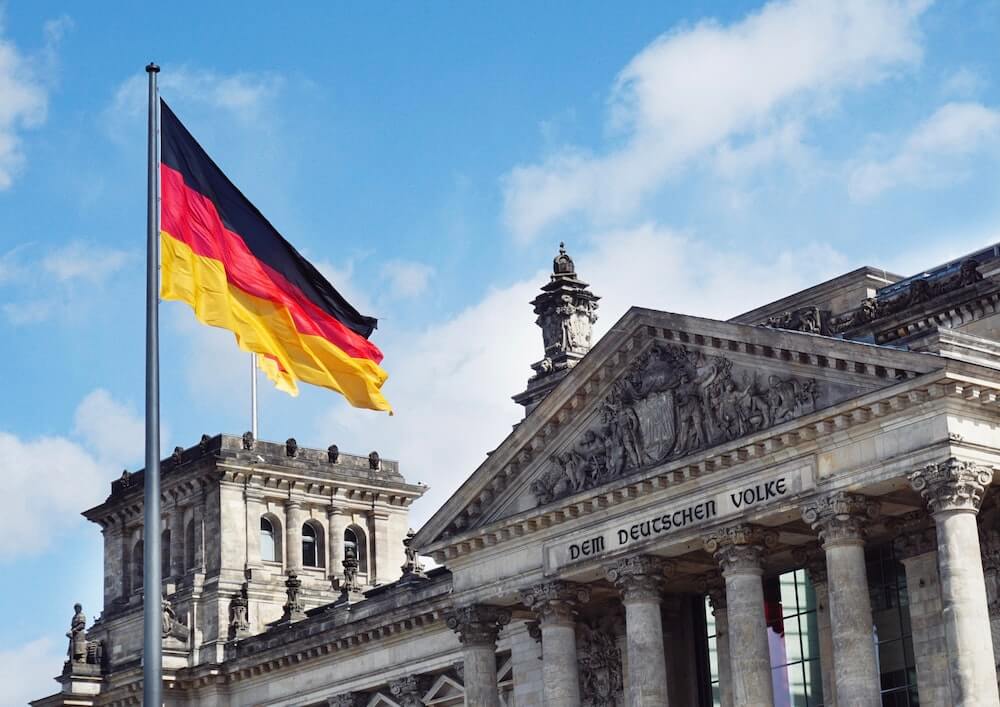
The Bundestag voted on 8 October to keep the rule that lets investors in Germany sell cryptocurrency tax-free once they have held it for a year. It rejected an opposition bill to scrap the Germany crypto tax holding period by 445 votes to 132, and a second motion failed the same evening.
Six days later the Germany crypto tax question returns, at the cabinet table rather than in the chamber. The finance ministry circulated a draft on 30 September that would end the one-year holding period for coins acquired from 1 January 2027, tax the gains as capital income at 25% plus the solidarity surcharge, and make platforms withhold at source from 2028. Germany crypto tax policy now turns on a purchase date rather than a parliamentary majority, and that date is 31 December 2026.
What the Bundestag Rejected by 445 Votes to 132
The Germany crypto tax bill came from Bündnis 90/Die Grünen as Drucksache 21/5752, dated 5 May 2026 and titled “Entwurf eines Gesetzes zum Schließen einer Gerechtigkeitslücke bei der Besteuerung von Kryptowerten”, a bill to close a fairness gap. Its operative change was one sentence in section 23 of the Income Tax Act, removing the one-year deadline for crypto sales. Gains would have been taxed at the seller’s personal rate regardless of holding time.
The finance committee recommended rejection back on 20 May, with CDU/CSU, AfD and SPD voting to reject and the Greens and Die Linke voting against rejection, per Drucksache 21/6112. CryptoTicker, which tallied the recorded vote, reported 445 members against and 132 in favor, with 53 cards not cast. A Die Linke motion to move crypto assets into section 20, Drucksache 21/5824, fell on a show of hands. Neither result locks the Germany crypto tax exemption in place.
The Ministry Draft Taxes Crypto at 25% and Starts Withholding in 2028
The coalition’s own draft, titled “Gesetz zur Reform der Besteuerung bestimmter Kryptowerte im Privatvermögen”, moves private crypto gains out of section 23 and into the capital income rules covering shares and funds, which is why the 8 October rejection settled little. The Germany crypto tax rate becomes a flat 25% withholding charge plus the 5.5% solidarity surcharge, an effective 26.375%, against a ministry estimate of about 160 million euros in 2028 rising to roughly 350 million by 2031.
Lending, passive staking and similar income would count as capital income, while security tokens, NFTs, asset-referenced tokens and certain e-money tokens stay outside the Germany crypto tax regime. Platforms deduct the tax themselves from 1 January 2028. Where a provider cannot establish what a customer paid, the draft sets withholding against 50% of sale proceeds, a substitute base well above the 30% used for securities today.
A coin bought on 30 December 2026 and sold two years later owes nothing, while the same gain on one bought a week later costs 2,637.50 euros. Selling inside a year stays the most expensive outcome at up to 47.475%. Source: BMF draft bull, 30 September 2026 · Chart: FinanceFeedsInvestor Takeaway
The 31 December 2026 cut-off leaves purchase timing as the only Germany crypto tax lever a holder still controls, since coins acquired by that date keep the one-year exemption while later buys carry 26.375%.
Germany Crypto Tax Dates Run From a Petition Hearing to the Bundesrat
The Petitions Committee heard the other side of the Germany crypto tax argument on 12 October. Petition 201716, filed by Nicole Nowak and signed by 44,439 people, asks parliament to keep the one-year holding period and leave crypto assets classified as other economic goods. It opened a public session at 12pm, with government representatives present.
Cabinet adoption is reported for 14 October, a date carried by CryptoTicker and not confirmed on government pages. The consultation window closed on 6 October, six days after the draft went out, a span FDP member Frank Schäffler flagged. Approval there would start rather than finish the Germany crypto tax process, because the Bundesrat and then the Bundestag still have to act.
Buy Before 1 January or Pay 26.375% Later
Coins bought on or before 31 December 2026 keep the exemption for as long as the grandfathering survives, so a purchase made this quarter and sold in 2029 would still be tax-free. Coins bought from 1 January 2027 carry 26.375% whenever sold. Short-term traders would pay less than they do now under Germany crypto tax rules, because gains realized inside a year currently attract personal rates reaching 45%.
Proving which side of the line a coin falls on becomes the holder’s burden. Steger notes that a 2021 purchase could be treated as a post-2026 acquisition if the platform holds no record of it, and the draft imposes no duty to pass acquisition data between providers when a customer switches. Exporting transaction histories before the year ends is cheap insurance for anyone using crypto tax filing tools to rebuild a cost basis.
France Moves on Stablecoin Conversions While Germany Moves on Holding Time
Europe is converging on taxing crypto without agreeing where the taxable moment sits. France’s finance committee backed a stablecoin conversion tax and an exit tax on 7 and 8 October, both aimed at January 2027, which would make swapping bitcoin into a MiCA e-money token taxable without any bank withdrawal. The Netherlands taxes a deemed return through its Box 3 system instead of disposals, and South Korea will trace private wallets from 2027.
Germany crypto tax reform is the narrower move, since a swap between two crypto assets stays untaxed and only the clock changes. Whether that distinction survives the Bundesrat is the open question, and holders working out whether a swap triggers tax will be reading the same committee papers.
Investor Takeaway
The Germany crypto tax draft’s withholding against 50% of sale proceeds from 2028 leaves an investor without purchase records facing a deduction many times the tax owed, ten times over on one adviser’s worked example.