
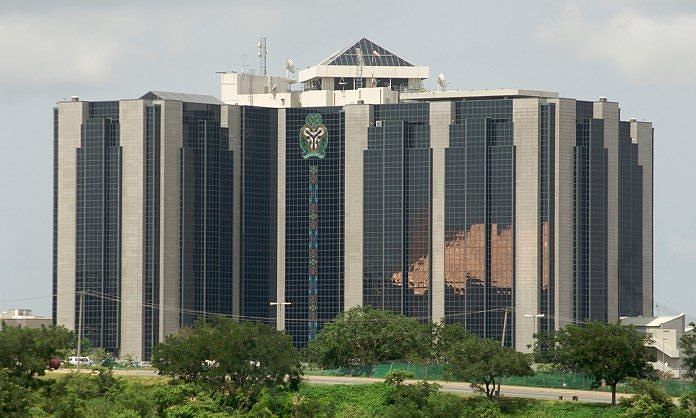
The Central Bank of Nigeria (CBN) introduced licensing rules for stablecoin issuers on Nov. 5 and prohibited algorithmic stablecoins, placing virtual asset activity that touches Nigeria under direct central bank supervision.
The Regulations for the Operations of Non-Security Virtual Assets in Nigeria apply to activities conducted in or from Nigeria, directed at Nigerian customers, or capable of materially affecting the country’s payment system, financial system, foreign exchange market or financial stability. That scope pulls offshore operators serving Nigerian users into the same licensing net as local firms.
The CBN will supervise non-security virtual assets used for payments, settlement and remittances, while the Securities and Exchange Commission (SEC) keeps authority over securities and investment contracts. Operators whose activity falls under both regulators must obtain approval from each. That division mirrors the framework President Bola Tinubu set up in July, when his executive order created a CBN-chaired Virtual Asset Council without moving powers between agencies.
What Stablecoin Issuers Must Now Hold
Issuers must incorporate a local company and secure a CBN licence before commencing operations. Every operator must also obtain the bank’s express written approval before providing any regulated service.
Issuers of naira-pegged stablecoins must maintain at least $7.44 million (₦10 billion) in paid-up capital, while issuers of foreign currency-pegged stablecoins must maintain $11.16 million (₦15 billion). Other virtual asset service providers face a minimum capital requirement of $744,048 (₦1 billion). Capital held to meet SEC licensing requirements cannot be counted towards this amount. For comparison, the SEC separately proposed in draft rules on September 1 that market-maker forex broker-dealers maintain $2.23 million (₦3 billion) in paid-up capital, though, proposal has not yet come into force.
Naira-pegged issuers must keep a reserve deposit account at the CBN holding at least 20% of their total reserve pool. Stablecoin holders can redeem at par value in the reference currency, with redemption completed within one business day at most. The regulations also prohibit algorithmic stablecoins. Platforms that facilitate peer-to-peer trading need separate CBN approval. Before they release or credit regulated tokens, they must confirm that the names on naira payment accounts match the account holder’s Bank Verification Number (BVN).
Investor Takeaway
Stablecoin issuers must obtain a CBN licence, establish a local presence and meet capital, reserve and redemption requirements, while P2P platforms face additional approval and verification rules.
Why Nigeria Is Regulating Stablecoins Now
The IMF warned in June that dollar-pegged tokens were testing Nigeria’s monetary framework, and it noted that Nigeria accounts for about 60% of sub-Saharan Africa’s stablecoin inflows since 2019. The Fund flagged risks to monetary sovereignty and capital flow management, and it urged authorities to bring stablecoin activity fully inside the regulatory perimeter.
Market size sharpened that pressure. SEC Director-General Emomotimi Agama said in March that Nigeria had recorded roughly $96 billion in crypto transactions, up from $50 billion a year earlier, driven by retail participation and peer-to-peer trading.
The new rules extend a reversal that began with the CBN’s 2021 ban on banks handling crypto transactions and continued through the Investment and Securities Act 2025, which classified digital assets as securities. Tinubu’s July order also directed the CBN to proceed with a regulatory sandbox for virtual assets and told the Nigeria Revenue Service to publish a tax policy for the sector. It gave the new council 30 days to produce a harmonized implementation framework, and the government is finalizing a Virtual Assets White Paper on longer-term policy.
Investor Takeaway
Rising stablecoin adoption, growing crypto transaction volumes and concerns about monetary sovereignty have pushed Nigeria to bring virtual asset activity more firmly under regulatory oversight.