
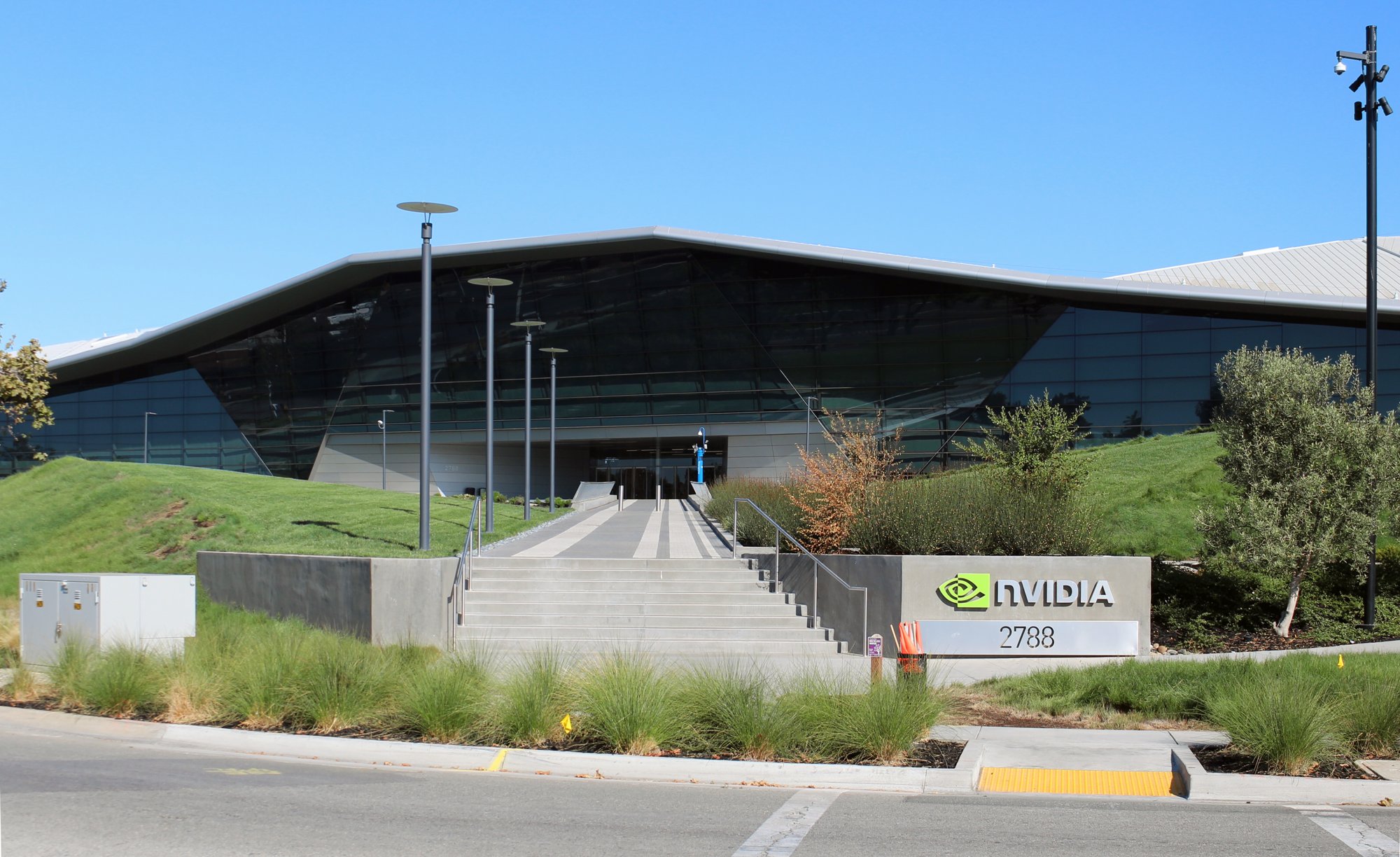
Nvidia (NASDAQ: NVDA) shares fell 5.3% in regular trading on Friday, October 30, as a broader semiconductor selloff intensified following disappointing guidance from Intel and fresh concerns about the financial returns on artificial intelligence infrastructure spending. The decline extended beyond the initial premarket reaction, when Nvidia was down 2.9%, Broadcom fell 3.8% and AMD lost 8.3%, according to TipRanks at 10:55 UTC.
The broader market reaction also became more severe after the opening bell. Reuters reported Nvidia down 5.3% and AMD down 12.1% in its later regular-session snapshot, while the Philadelphia Semiconductor Index dropped 8.7%. The Nasdaq Composite fell 3.37% and the S&P 500 declined 2.08%, showing that the pressure had spread beyond individual chipmakers.
The selloff comes despite Amazon maintaining its approximately $220 billion capital expenditure forecast for 2026 and Alphabet retaining its $195 billion to $205 billion annual investment range. Alphabet spent $51.36 billion on capital expenditure in the third quarter, below the $55.09 billion analysts expected, but did not reduce its full-year outlook.
The distinction is important for Nvidia investors. The latest hyperscaler reports have not demonstrated a retreat from headline AI infrastructure budgets. Instead, investors appear increasingly concerned about the amount of cash being consumed to finance that expansion and how quickly the spending will translate into sustainable returns.
Nvidia Stock Decline Deepens After the Opening Bell
The initial premarket reaction reflected two separate concerns. Intel’s fourth-quarter guidance raised questions about semiconductor demand and operating conditions, while Amazon’s latest results highlighted the financial burden of maintaining an aggressive AI infrastructure expansion.
TipRanks attributed the weakness across Nvidia, Broadcom and AMD to Intel’s disappointing outlook, Amazon’s negative free cash flow and investor concerns about the durability of AI-chip demand. That is an explanation of the market reaction rather than evidence that hyperscaler orders for Nvidia products have been cancelled or reduced.
Intel forecast fourth-quarter revenue of $15 billion to $16 billion and adjusted earnings of $0.25 per share, against analyst expectations of approximately $17.1 billion and $0.43, respectively. Its CFO also warned that the PC slowdown could continue at least through the first half of 2027.
The warning added pressure to semiconductor companies already facing questions about memory costs, customer spending and the timing of AI infrastructure returns. AMD and other processor suppliers have direct exposure to the PC market, while Nvidia’s primary investment case remains more closely connected to data-center accelerators and AI computing infrastructure.
FinanceFeeds examined the earlier earnings reactions from Microsoft and Alphabet in its October 29 Nvidia stock analysis. That report found that the major buyers were still expanding their AI infrastructure budgets, even as Alphabet’s share-price reaction showed that strong investment plans alone were no longer enough to satisfy investors.
Amazon Keeps $220 Billion Capex Plan Despite Cash Outflow
Amazon’s third-quarter results added another dimension to the debate. The company maintained its expectation of approximately $220 billion in cash capital expenditure for 2026, but its trailing-12-month free cash flow deteriorated to a negative $42.4 billion, compared with positive $14.8 billion a year earlier.
The cash outflow was primarily driven by a $94.8 billion year-over-year increase in purchases of property and equipment, net of sales and incentives, which Amazon said largely reflected AI investment.
However, the operating performance of Amazon Web Services remained strong. AWS revenue increased 39.3% year over year to $46 billion, its fastest growth in nearly five years, while operating income reached $17.8 billion. CEO Andy Jassy also indicated that AWS revenue growth could exceed 40% in both 2027 and 2028.
This creates a more complicated investment picture than a simple slowdown in AI demand. Amazon is reporting substantial cloud growth and continuing to commit capital to infrastructure, but the resulting cash requirements are attracting greater scrutiny. Its shares were down approximately 6.6% in the premarket snapshot cited by TipRanks before recovering to a smaller decline in later regular trading, according to Reuters.
FinanceFeeds’ analysis of Amazon’s third-quarter results examined the gap between AWS growth and the company’s deteriorating free cash flow. For Nvidia, the relevance is that Amazon’s spending supports demand for computing infrastructure, but investors are increasingly examining the financial capacity and expected returns of the companies making those investments.
Alphabet Maintains Its Capex Outlook Despite the Q3 Spending Miss
Alphabet presents a similar contrast between investment commitments and market expectations. The company recorded $51.36 billion in third-quarter capital expenditure, below the approximately $55.09 billion analysts expected. Nevertheless, CFO Anat Ashkenazi maintained the full-year 2026 capex guidance range of $195 billion to $205 billion.
Management also expects capital expenditure to increase significantly in 2027, with further details scheduled for a later earnings update. The company’s third-quarter spending therefore does not represent a reduction in its announced investment ambitions.
Alphabet’s operating performance also showed strong demand for AI infrastructure. Google Cloud revenue increased 103% year over year to $30.7 billion, while the company reported substantial growth in demand for its AI infrastructure and TPU systems. At the same time, third-quarter free cash flow was negative $9.07 billion, reflecting the scale of investment and other cash requirements during the period.
The TPU business is particularly relevant to Nvidia. Alphabet is investing not only in infrastructure that can support external accelerators but also in its own AI chip ecosystem. Consequently, total hyperscaler capital expenditure cannot be treated as a direct measure of future Nvidia GPU purchases.
FinanceFeeds’ Alphabet results analysis examined how the company maintained its investment programme despite negative quarterly free cash flow and a sharp share-price decline. The same distinction now matters for the wider AI semiconductor sector: infrastructure spending remains substantial, but investors are becoming more selective about which companies can convert that spending into earnings and cash generation.
The AI Chip Trade Faces a Return-on-Investment Test
The latest weakness does not establish that hyperscalers are cancelling Nvidia orders or cutting their infrastructure budgets. Amazon and Alphabet have maintained their headline spending plans, and both reported substantial growth in their cloud businesses. However, the market is beginning to distinguish between the amount of money committed to AI infrastructure and the financial returns that those investments ultimately generate.
There is also an important distinction between total capital expenditure and spending directly addressable by Nvidia. Data-center construction, electricity infrastructure, cooling systems, networking equipment, storage and alternative accelerator platforms all compete for portions of hyperscaler budgets. Even when total spending increases, the amount allocated to Nvidia products depends on customers’ hardware requirements, deployment schedules and decisions about custom silicon.
Intel’s guidance has added a separate concern about semiconductor demand, particularly in the PC market. The combination of weaker processor expectations, Amazon’s negative free cash flow and Alphabet’s spending-heavy results has created a difficult environment for chip valuations, even without evidence of a broad reduction in AI infrastructure commitments.
For Nvidia, the next important developments will be evidence of continued accelerator demand, hyperscaler deployment schedules, customer investment returns and the extent to which AI infrastructure spending translates into revenue growth. The market’s reaction suggests that maintaining large capital expenditure budgets may no longer be sufficient to support semiconductor valuations on its own.
The central issue is therefore not whether the AI infrastructure buildout is continuing. Amazon and Alphabet have provided evidence that it is. The question is whether the returns from that investment will justify its increasing financial cost, and whether Nvidia can continue converting the spending into durable chip demand as customers become more disciplined about capital allocation.